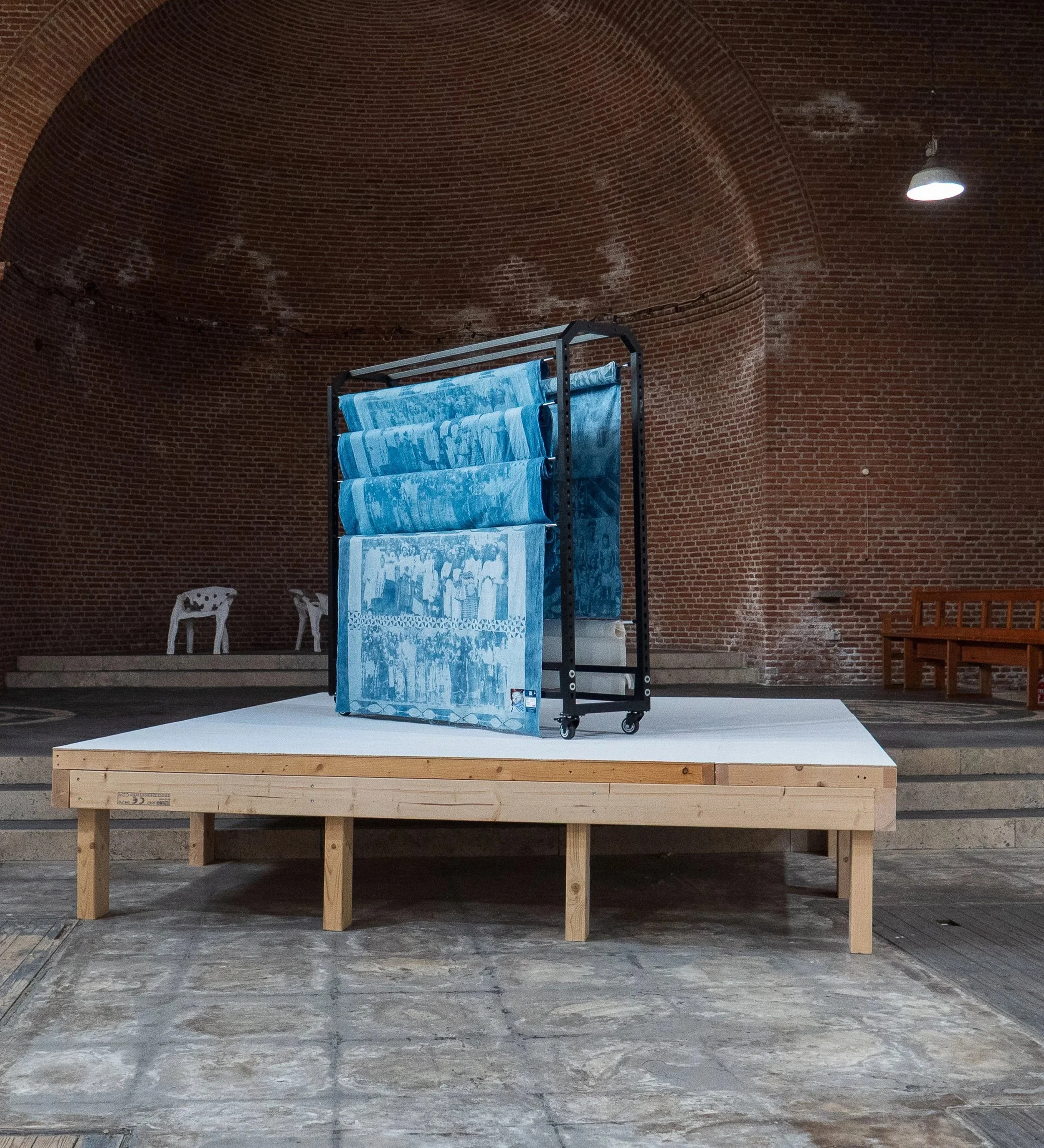


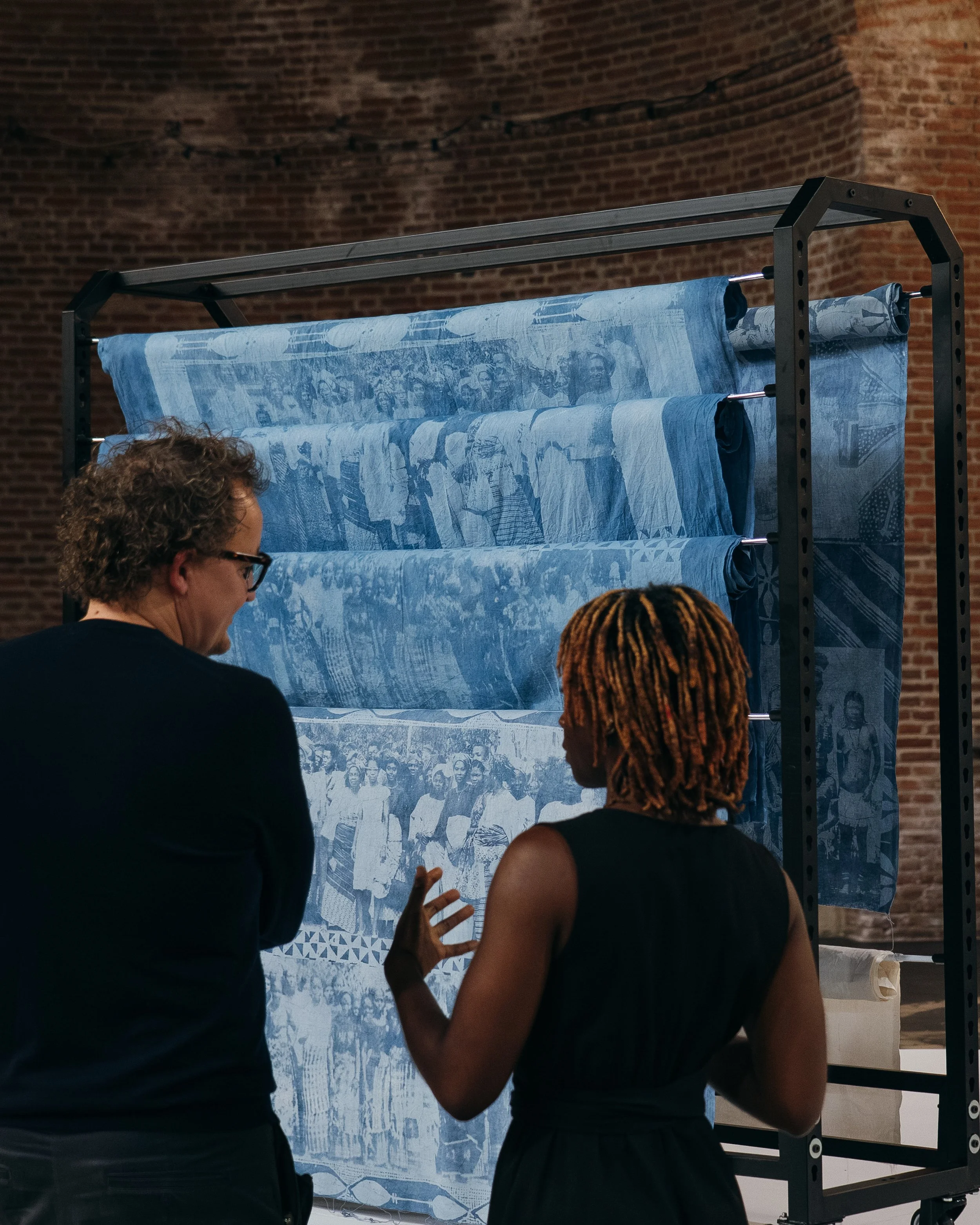

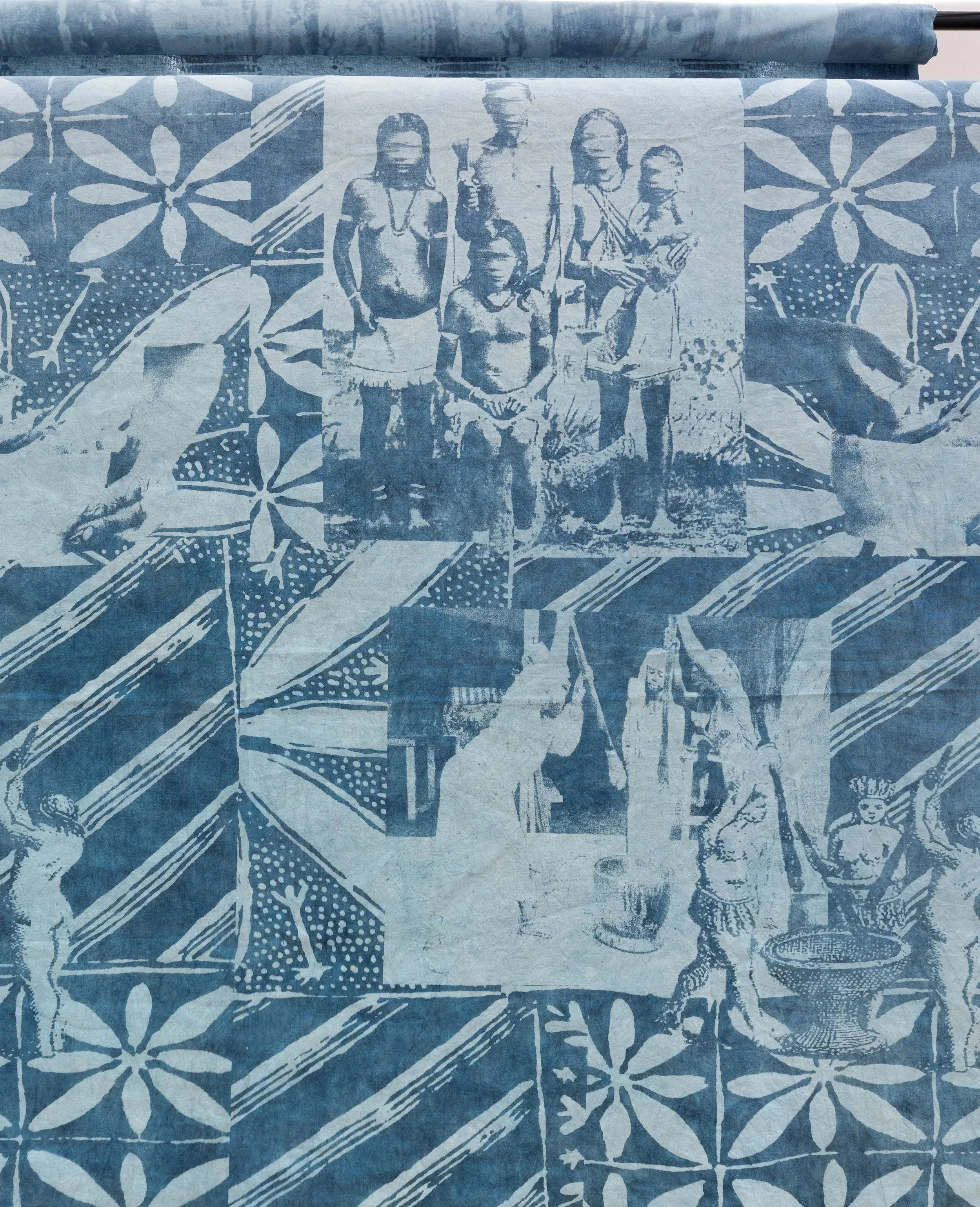
1-3, 5. Installation and detail views from Unfair Amsterdam’s De Kerk, 2025, indigo-dyed cotton, ready-made iron fabric rack, custom sticker, 165 x 170 x 70cm (photos by artist)
4. Photo by Almicheal Fraay.
In these textile works, Nnebe develops archival photographs through indigo-dyeing using cassava - her own adaptation of the traditional Yoruba practice of adire eleko. Recreated on lengths of fabric long enough to be worn as a wrapper are photographs from the 1949 Abeokuta (the birthplace of adire) and 1929 Aba Women’s Wars - protest movements led by Nigerian women against colonial taxation in which the wrapper featured as a uniform of protest.
Building on her past research into cassava, Nnebe demonstrates that the history of adire eleko is inseparable from that of the Trans-Atlantic Slave Trade, and uses this as a bridge to connect to histories of refusal and dissent in the Caribbean that also made use of the crop.
Moving between object and garment, archive and use, the work collapses distinctions between representation and material practice. The wrapper emerges not simply as a garment, but as a site through which histories of labor, resistance, and transatlantic exchange remain visible and available for reactivation.
Through performance, Nnebe turns the process of indigo dyeing into a methodology for making visible the sediments of colonial history we've been taught to forget. Through both her body and labour, she engages in a choreographed rhythm that reveals connections between Nigerians and the Tainos — indigenous peoples of the Caribbean and South America — rooted in the transmission of Indigenous knowledge.


1-5. Performance at Unfair Amsterdam’s De Kerk, 2025, (photo by Almicheal Fraay)

The artist would like to acknowledge the support of the Canada Council for the Arts.